Procédures valvulaires percutanées complexes : ce que le réanimateur doit savoir
Complex percutaneous valve interventions: essential knowledge for intensivists
DOI:
https://doi.org/10.37051/mir-34-002239Keywords:
Chirurgie cardiaque, Maladie valvulaire, Insuffisance cardiaque, Insuffisance cardiaque droiteAbstract
Transcatheter valvular interventions have been rapidly expanding in cardiology. These innovative techniques provide an alternative for patients deemed ineligible for surgery and previously left without appropriate treatment. While transcatheter aortic valve replacement (TAVI) is now widely adopted, mitral and tricuspid interventions remain more complex.
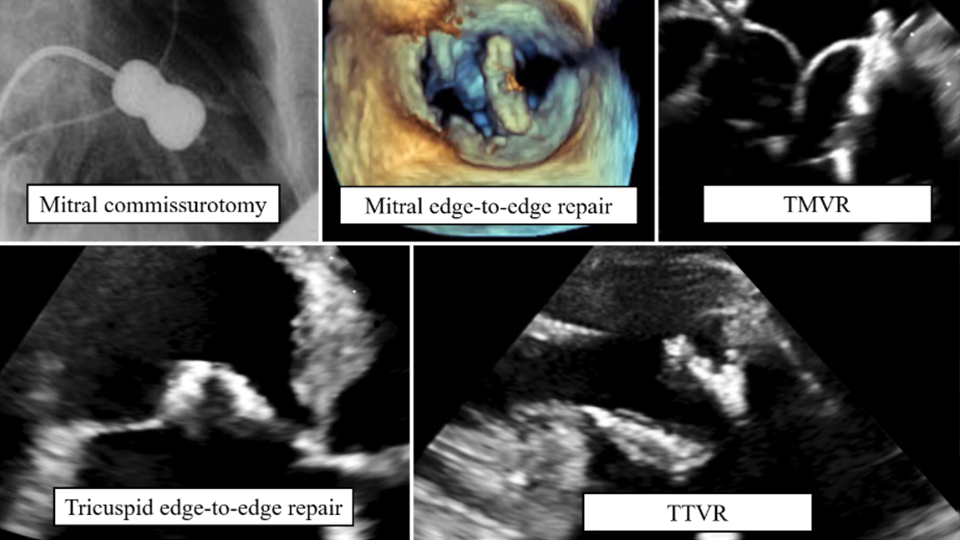
Percutaneous mitral valvuloplasty is performed to treat rheumatic mitral stenosis by reopening commissures. Edge-to-edge mitral repair corrects organic or functional mitral regurgitation in high-risk surgical patients with an eligible morphology. Transcatheter mitral valve implantation (TMVI) can be used to treat bioprosthetic or annuloplasty dysfunction, avoiding redo surgery.
For the tricuspid valve, edge-to-edge repair addresses functional tricuspid regurgitation using a similar but more technical approach than for the mitral valve. Transcatheter tricuspid valve implantation (TTVI), currently under investigation in several studies, remains restricted to carefully selected patients.
These procedures expose patients to vascular (bleeding, stroke), esophageal, and cardiac (tamponade) complications, as well as device-specific risks. A thorough understanding of these interventions, multimodal imaging guidance, and close monitoring are essential to prevent these complications.