Corticothérapie systémique dans l’Exacerbation aigue de BPCO : vers une prescription personnalisée guidée par l’éosinophilie ?
Éosinophilie : une stratégie d’épargne corticoïde
DOI:
https://doi.org/10.37051/mir-34-002407Keywords:
COPD, corticosteroids, Eosinophil, Type 2 Inflammation, Precision MedicineAbstract
Objective:
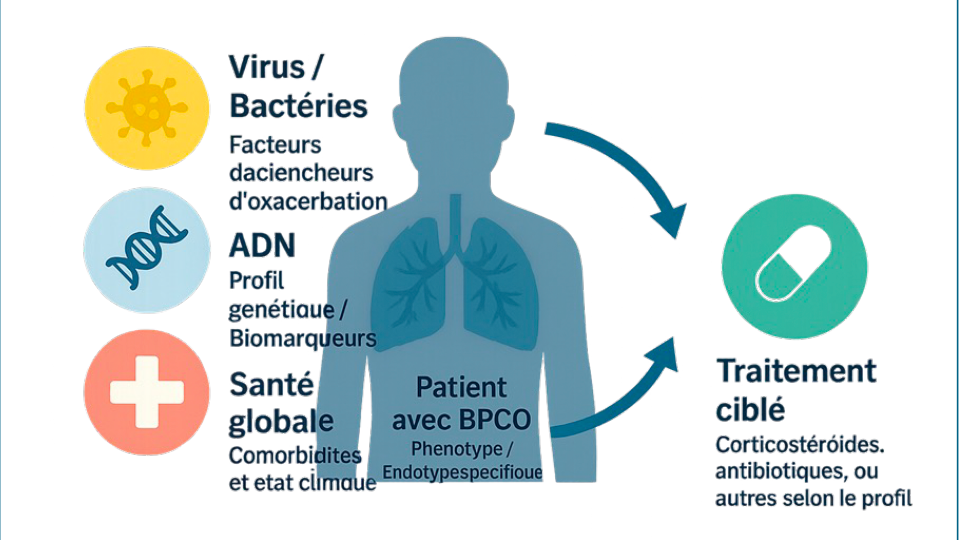
Acute COPD exacerbations (AECOPD) are heterogeneous and should not be treated uniformly. The new approach involves identifying treatable traits (such as phenotypes and endotypes) to tailor systemic corticosteroid treatment, which appears particularly beneficial in eosinophilic forms.
The article aims to promote a personalized approach to systemic corticosteroid therapy in AECOPD, challenging routine prescription in favor of stratification based on blood eosinophilia as a predictive biomarker of benefit, while considering the phenotypic heterogeneity of exacerbations.
Methods:
This is a narrative review integrating data from randomized clinical trials (RCTs), retrospective and prospective observational studies, as well as post-hoc analyses on the efficacy and risks of corticosteroid therapy in hospitalized or ICU patients, with a focus on inflammatory endotypes (bacterial, viral, eosinophilic, pauci-inflammatory).
Results:
Systemic corticosteroids improve respiratory function in moderate COPD exacerbations but do not impact mortality in severe ICU cases. Blood eosinophilia (≥2% or ≥300/µL) predicts a better prognosis and superior response to corticosteroids. Available studies demonstrate the non-inferiority of a corticosteroid-sparing strategy (reduction of 33-49% in prescriptions without increased risk of treatment failure).
Conclusion:
Personalized corticosteroid prescription guided by blood eosinophilia is essential to optimize benefits and minimize risks of corticosteroid therapy in AECOPD, reserving corticosteroids for type 2 endotypes. Logistical challenges persist, but this precision medicine approach marks a paradigm shift from the "one size fits all" model.